
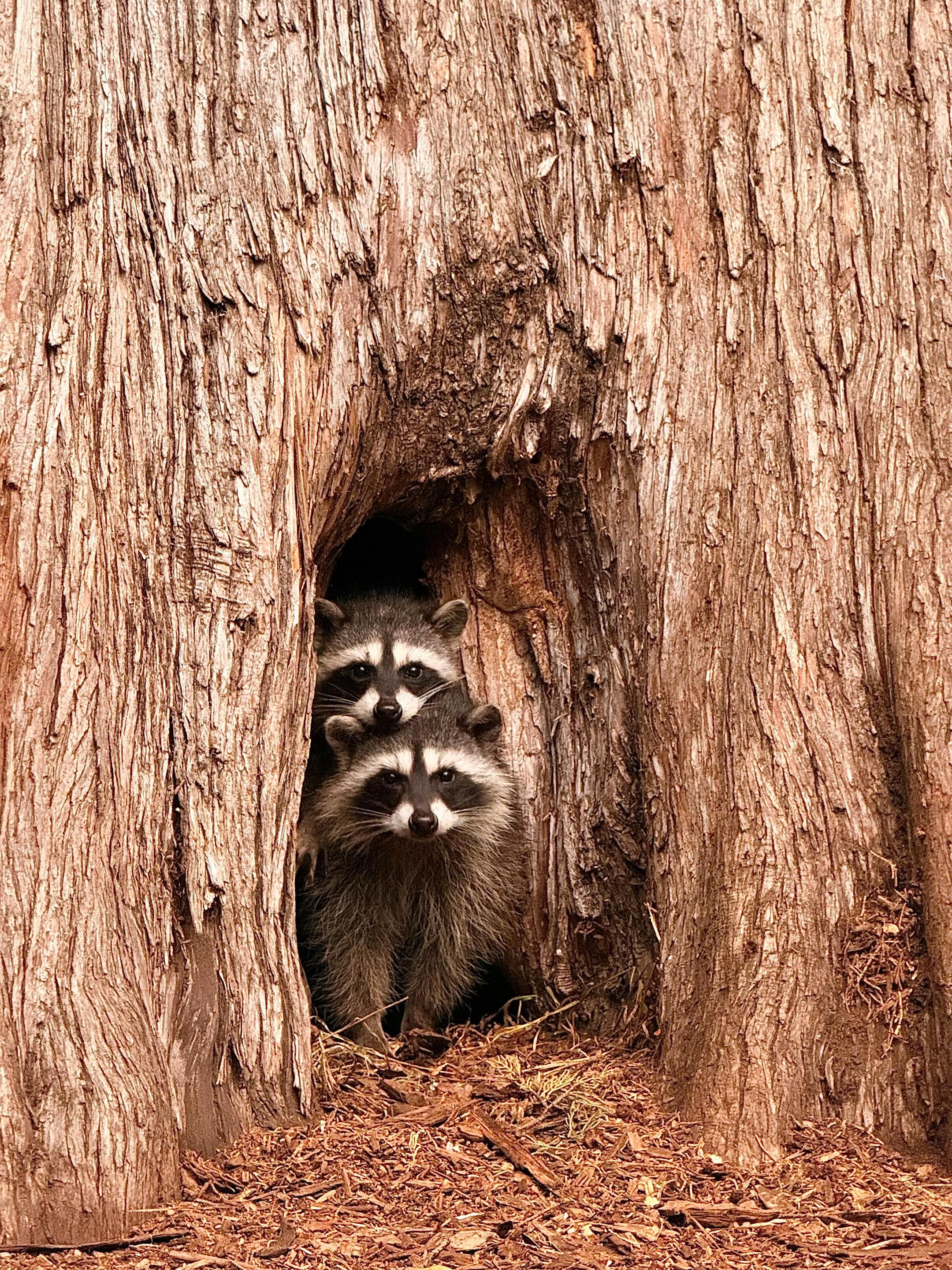
Spring in Indiana is a season of renewal — longer days, warmer nights, and the unmistakable signs of wildlife waking up. For raccoons, this time of year marks one of the most important phases of their life cycle: baby season. And for homeowners, it’s also the time when raccoon activity around homes tends to increase.
Understanding why raccoon mothers behave the way they do in spring can help you protect your home, avoid accidental harm to wildlife, and know when it’s time to call in a professional.
Why Spring Is “Baby Season” for Raccoons
Raccoons typically mate in late winter, and with a gestation period of about 63 days, many litters arrive between mid‑March and early May. A typical litter includes 2–5 kits, all born blind, helpless, and completely dependent on their mother.
Because newborn kits can’t regulate their body temperature or move on their own, mother raccoons seek out warm, enclosed, safe spaces — and unfortunately, human structures often fit the bill.
Common den sites include:
• Attics
• Chimneys
• Barn lofts
• Crawl spaces
• Soffits and roofline gaps
• Garages and sheds
If a mother raccoon finds even a small opening, she may see your home as the perfect nursery.
Why Raccoon Mothers Choose Homes
Raccoon mothers aren’t trying to cause trouble — they’re trying to survive. Spring weather in Indiana can be unpredictable, with cold snaps, storms, and heavy rain. Human structures offer:
• Warmth
• Protection from predators
• Stable shelter for newborns
• Quiet, dark spaces ideal for raising kits
To a mother raccoon, your attic is simply a safer alternative to a hollow tree.
Signs a Mother Raccoon May Be in Your Home
Because kits are vocal and mothers are active, homeowners often notice signs such as:
• Chittering, whining, or squeaking (especially at night)
• Scratching or thumping in the attic or walls
• Strong odors from nesting materials or waste
• Visible damage around rooflines, soffits, or vents
• Tracks or overturned items near entry points
If you’re hearing high‑pitched noises, that’s often the kits communicating with their mother.
Understanding Their Behavior: Protective, Not Aggressive
Mother raccoons are highly protective, especially in the first few weeks after birth. This doesn’t mean they’re looking for conflict — it means they’re doing what any parent would do.
In spring, you may notice:
• Increased nighttime activity
• Frequent trips in and out of the den
• Defensive behavior if startled
• Reluctance to abandon a den site
This is why humane, professional removal is so important. Separating a mother from her kits can lead to dangerous situations for both the animals and the homeowner.
Why DIY Removal Can Go Wrong
Attempting to remove a raccoon family on your own can lead to:
• Orphaned kits
• Injured animals
• Hidden babies left behind in walls or insulation
• Defensive behavior from the mother
• Damage to your home from improper exclusion
Spring is one of the most sensitive times for wildlife removal. A professional knows how to locate the kits, reunite the family safely, and secure the home without causing harm.
How J’s Wildlife Solutions Handles Spring Raccoon Calls
At J’s Wildlife Solutions LLC, we take a humane-first approach to every raccoon case — especially during baby season.
Our process includes:
• A thorough inspection to locate all entry points
• Safe, ethical removal methods that keep mothers and kits together
• Relocation or reunification strategies that follow Indiana guidelines
• Full home sealing and prevention to stop future intrusions
• Education for homeowners on what to expect and how to stay protected
We believe in protecting both your home and the wildlife that shares our Indiana ecosystem.
How Homeowners Can Prevent Spring Raccoon Intrusions
A few proactive steps can make a big difference:
• Inspect rooflines, soffits, and vents for gaps
• Keep pet food and trash secured
• Trim branches that provide roof access
• Repair storm damage promptly
• Install chimney caps and vent screens
Spring is the perfect time to give your home a quick wildlife‑proofing check.
If You Suspect a Raccoon Family Has Moved In
Don’t panic — and don’t try to remove them yourself. Spring raccoon cases require care, patience, and expertise.
J’s Wildlife Solutions LLC is here to help you navigate the season safely, ethically, and with peace of mind.